
 By Felicia Ragucci
Peer Reviewed
My very first patient of clerkship year had the shortest medication list I’ll ever see: none. After confirming this, I asked if she takes over the counter medications, vitamins, minerals, or herbs. “Oh yes,” she said, “magnesium every night.” She has no known magnesium deficiency and it was not recommended by a physician or healthcare provider. When I inquired what she takes it for, she paused. “Everything?” she said, shrugging her shoulders. It was closer to a question than to a statement.
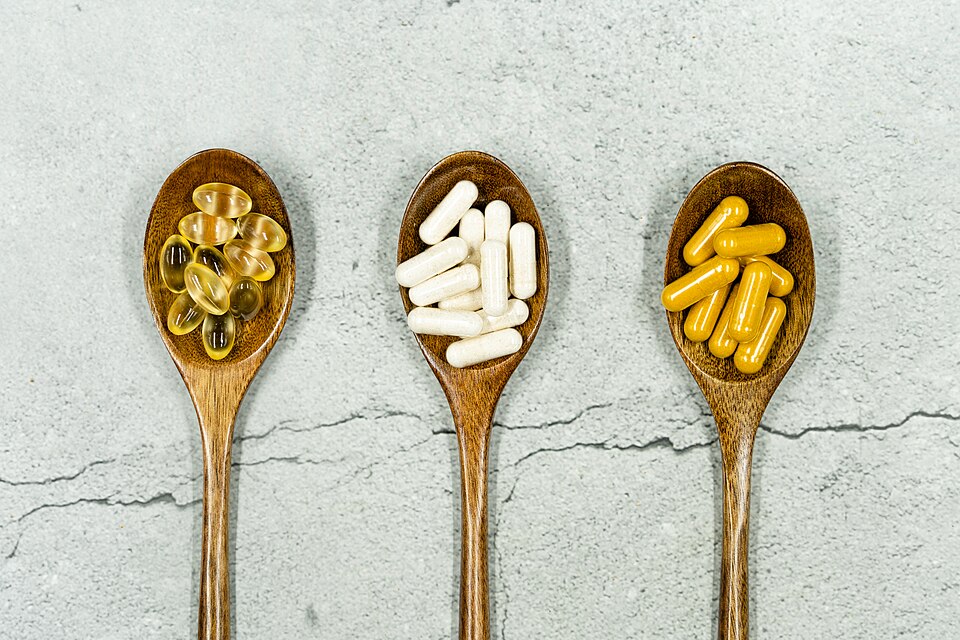
My patient isn’t alone. The 2018 National Health and Nutrition Examination Survey1 revealed that in the past 30 days, 57.6% of U.S. adults had used any dietary supplement, a term covering an extensive list of substances.2 Vitamins (like D and E), minerals and trace elements (like magnesium and zinc), amino acids (like L-cysteine), herbs (like echinacea and ginseng), and other ingredients are available for purchase in many forms: tablets, gummies, capsules, powders, liquids, and patches. And of those who reported using supplements, 35.1% consumed more than one. Most opted for multivitamin-mineral combinations, with vitamin D and omega-3-fatty acids claiming second and third place, respectively.1
Today, there are approximately 100,000 supplements available in the US.3 These products are so familiar to us that it’s difficult to imagine a world without them. Yet, that world existed—and not too long ago.
Central to the story are vitamins, the most widely used category of supplement. The word itself dates only to 1912, created by Polish biochemist Casimir Funk.4 Combining vita, the Latin word for life, with amine, the chemical structure he (incorrectly) assumed these compounds share, Funk offered language to describe what at the time was a novel concept in nutrition and health. Although scientists agreed that the three macronutrients (proteins, fats, and carbohydrates) and some minerals were necessary for life, the idea that food contains other organic compounds required by our bodies in microscopic amounts was not yet understood.5 Funk captured this idea in his original definition: “…all these diseases…can be prevented and cured by the addition of certain preventive substances; the deficient substances, which are of the nature of organic bases, we will call ‘vitamines’; and we will speak of a beriberi or scurvy vitamin, which means, a substance preventing the special disease.”6
It took decades for this idea to take hold. In the late 19th and early 20th centuries, vitamin-deficiency diseases puzzled the medical community, which at the time was captivated by another scientific novelty: germ theory.5 For example, many were under the mistaken impression that the disease beriberi, which is caused by lack of vitamin B1 (thiamine), had an infectious etiology. Eventually, during experiments in the then-Dutch colony of Indonesia, physician Christiaan Eijkman observed that chickens fed rice stripped of its bran developed a beriberi-like illness.7 His work was continued by Gerrit Grijns, who determined that a missing nutritional substance was to blame. It took another couple decades before chemists isolated vitamin B1 in 1926. Ten years later, they synthesized it.5
Each vitamin has its own interesting history.4 Discovering the vitamin-deficiency syndromes transformed our nutritional landscape in two critical ways: fortification and supplements.8 Fortification is adding nutrients to food products to prevent deficiencies. Just four years after thiamine was synthesized, the U.S. Committee on Food and Nutrition recommended adding it to flour,9 along with niacin (vitamin B3) and riboflavin (vitamin B2). Since 1940, staple foods have been fortified across the globe. As a result, at least in high-income countries like the US, illnesses like rickets (vitamin D), pellagra (vitamin B3), and xerophthalmia (vitamin A) no longer pose the threat they once did.
Fortification was partly motivated by food shortage concerns during the Great Depression and World War II.8 Marketers capitalized on the still-real fear of deficiency diseases, convincing consumers that vitamin pills were necessary for health. And maybe they were, at least for those who lacked access to the real deal: a varied diet of plant and animal whole foods. Yet, as food fortification expanded and agriculture modernized, Americans did have access to vitamin-rich food, and deficiencies dwindled. However, historical events in food policy and global economic development continued to emphasize single-nutrient diseases and deficiencies,8 allowing the supplement industry to eventually grow into a booming business that expanded far beyond just vitamins.
Now, however, the promise of supplements is different. If you go to your local convenience store, you won’t find vitamin C advertised as protection from scurvy. Instead of what you won’t get, supplements are about what you will get: “Daily Immune Support,” “Support your Healthy Aging.” For example, Emergen-C’s website10 tags phrases about immune health with an asterisk; the standard disclaimer that follows demonstrates just how far vitamins have come from their deficiency-defying days: “This statement has not been evaluated by the Food and Drug Administration. This product is not intended to diagnose, treat, cure, or prevent any disease.”
Modern interest in supplements has shifted away from disease prevention and toward health preservation and longevity.11 And as described earlier, many Americans are on board. The disappointing reality is that their efforts appear largely ineffectual. In 2022, the U.S. Preventive Services Task Force (USPSTF) determined that in the general adult population, there is insufficient evidence12 to recommend multivitamin supplements for preventing heart disease and cancer, the leading causes of death.13 The Task Force analyzed 84 randomized controlled trials (RCTs) and 6 cohort studies containing data from almost 700,000 people. Most vitamins and minerals conferred no clinically significant benefits. Recent research has agreed: a cohort study published in 202414 followed nearly 400,000 adult multivitamin users for over 20 years, failing to find any mortality benefit.
Medicine is all about benefits versus harms, and in some cases, supplements are harmful: in their report, the USPSTF found that lung cancer incidence increased in those who smoke tobacco and use beta-carotene.12 This singular finding becomes more worrisome when we consider the thousands of supplements on the market that have not been rigorously studied. And because these products are not tested or approved by the Food and Drug Administration (FDA),15 we cannot be certain that they even contain their listed ingredients. Even if they are not harmful in isolation, substances can have potentially dangerous interactions with other medications,15 which is why it’s so important to ask our patients about them.
Some supplements are recommended in certain cases, like vitamin B12 (which is only found in animal products) for strict vegans or those with malabsorptive conditions who cannot obtain enough B12 from their diet.17 Additionally, folic acid is recommended before and during pregnancy to prevent neural tube defects. However, most other vitamins are not recommended: individuals aged 60 and older who take vitamin D to prevent bone fractures may be surprised to learn that the USPSTF recommended against doing so in December 2024.18
So, the best evidence we have suggests that besides those with known deficiencies or specific risk factors, the average person who eats food does not benefit from supplements. In the past year, I’ve heard multiple doctors dismiss these products as “expensive urine,” referring to the fact that many substances are water-soluble and end up being flushed down the toilet.
And yet, my patient and millions more continue buying them. Their choices, while not evidence-based, are explainable and understandable. Be it clever marketing, powerful psychology, or the placebo effect,19 people aren’t ready to give up their fortified gummy bears just yet. The Task Force said “insufficient” evidence after all, at least for multivitamin-minerals. And even if those gummies won’t prevent us from dying, recent RCTs20,21,22 showed statistically significant benefits in cognition and memory for older adults taking multivitamin-minerals. Heart disease and cancer are scary, but Alzheimer’s and other forms of dementia are just as concerning in our aging population.23 More research is needed before universal recommendations are made, but these results are intriguing.
So, when my patient told me about her magnesium, did I push back? No. Call it first-day jitters or lack of courage in a newly minted clinical student. Her response stuck with me though—that singular “Everything?” captured optimism, skepticism, curiosity, and perhaps most of all, hope. Maybe that’s why I wasn’t so quick to disparage her supplement: a part of me is holding out hope too.
Here is the summary from the NIH’s “Dietary Supplements: What You Need to Know”:2
“Some dietary supplements can improve overall health and help manage some health conditions. For example:
- Calcium and vitamin D help keep bones strong and reduce bone loss.
- Folic acid decreases the risk of certain birth defects.
- Omega-3 fatty acids from fish oils might help some people with heart disease.
- A combination of vitamins C and E, zinc, copper, lutein, and zeaxanthin (known as an Age-Related Eye Disease Study [AREDS] formula) may slow down further vision loss in people with age-related macular degeneration (AMD).
Many other supplements need more study to determine if they have value.”
Felicia Ragucci is a Class of 2028 medical student at NYU Grossman School of Medicine
Reviewed by Michael Tanner, MD, Executive Editor, Clinical Correlations
Image courtesy of Wikimedia Commons: formulatehealth, CC BY 2.0 <https://creativecommons.org/licenses/by/2.0>
References
- Mishra S, Stierman B, Gahche JJ, Potischman N. Dietary Supplement Use Among Adults: United States, 2017–2018. NCHS Data Brief, no 399. Hyattsville, MD: National Center for Health Statistics. 2021. doi: https://doi.org/10.15620/cdc:101131.
- National Institutes of Health: Office of Dietary Supplements – Dietary Supplements: What You Need to Know. https://ods.od.nih.gov/factsheets/WYNTK-Consumer/ Updated January 4, 2023. Accessed August 25, 2025.
- Cadwallader AB, Council on Science and Public Health A. Which Features of Dietary Supplement Industry, Product Trends, and Regulation Deserve Physicians’ Attention? AMA J Ethics. 2022;24(5):E410-418. doi:10.1001/amajethics.2022.410
- Carpenter KJ. A short history of nutritional science: part 3 (1912–1944). J Nutrition. 2003;133(10):3023-3032. doi:10.1093/jn/133.10.3023
- Semba RD. The discovery of the vitamins. Int J Vitam Nutr Res. 2012;82(5):310-315. doi:10.1024/0300-9831/a000124
- Funk C. The Etiology of Deficiency Diseases. J State Med. 1912;20:341-368.
- Nobel Prize in Physiology or Medicine 1929. Christiaan Eijkman Nobel Prize lecture. Antineuritic Vitamin and Beriberi. NobelPrize.org. Accessed August 26, 2025. https://www.nobelprize.org/prizes/medicine/1929/eijkman/lecture/
- Mozaffarian D, Rosenberg I, Uauy R. History of modern nutrition science—implications for current research, dietary guidelines, and food policy. BMJ. 2018;361:k2392. doi:10.1136/bmj.k2392. Published June 13, 2018. Accessed August 26, 2025.
- Institute of Medicine (US) Committee on Use of Dietary Reference Intakes in Nutrition Labeling. Dietary Reference Intakes: Guiding Principles for Nutrition Labeling and Fortification. Washington (DC): National Academies Press (US); 2003. 3, Overview of Food Fortification in the United States and Canada. Available from: https://www.ncbi.nlm.nih.gov/books/NBK208880/
- Emergen-C Products: Immune support, zero sugar and more. Accessed August 29, 2025. https://www.emergenc.com/products/
- Jenkins DJA, Spence JD, Giovannucci EL, et al. Supplemental Vitamins and Minerals for CVD Prevention and Treatment. J Am Coll Cardiol. 2018;71(22):2570-2584. doi:10.1016/j.jacc.2018.04.020
- US Preventive Services Task Force, Mangione CM, Barry MJ, Nicholson WK, et al. Vitamin, Mineral, and Multivitamin Supplementation to Prevent Cardiovascular Disease and Cancer: US Preventive Services Task Force Recommendation Statement. JAMA. 2022;327(23):2326-2333. doi:10.1001/jama.2022.8970
- Murphy SL, Kochanek KD, Xu JQ, Arias E. Mortality in the United States, 2023. NCHS Data Brief, no 521. Hyattsville, MD: National Center for Health Statistics. 2024. DOI: https://dx.doi.org/10.15620/cdc/170564
- Loftfield E, O’Connell CP, Abnet CC, et al. Multivitamin Use and Mortality Risk in 3 Prospective US Cohorts. JAMA Netw Open. 2024;7(6):e2418729. doi:10.1001/jamanetworkopen.2024.18729
- Questions and Answers on Dietary Supplement Information for Consumers on Using Dietary Supplements; U.S. Food and Drug Administration. https://www.fda.gov/food/information-consumers-using-dietary-supplements/questions-and-answers-dietary-supplements. Updated February 21, 2024. Accessed August 27, 2025.
- Asher GN, Corbett AH, Hawke RL. Common Herbal Dietary Supplement-Drug Interactions. Am Fam Physician. 2017;96(2):101-107.
- Allen LH. Micronutrients — Assessment, Requirements, Deficiencies, and Interventions. N Engl J Med. 2025;392(10):1006-1016. doi:10.1056/NEJMra2314150
- US Preventive Services Task Force. Draft Recommendation Statement: Vitamin D, Calcium, or Combined Supplementation for the Primary Prevention of Falls and Fractures in Community-Dwelling Adults: Preventive Medication. https://www.uspreventiveservicestaskforce.org/uspstf/draft-recommendation/vitamin-d-calcium-combined-supplementation-primary-prevention-falls-fractures-communitydwelling-adults. Published December 17, 2024. Accessed November 2, 2025.
- Ubel PA. Why Too Many Vitamins Feels Just About Right. JAMA Intern Med. 2022;182(8):791-792. doi:10.1001/jamainternmed.2022.0119
- Yeung LK, Alschuler DM, Wall M, et al. Multivitamin Supplementation Improves Memory in Older Adults: A Randomized Clinical Trial. Am J Clin Nutr. 2023;118(1):273-282. doi:10.1016/j.ajcnut.2023.05.011
- Baker LD, Manson JE, Rapp SR, et al. Effects of cocoa extract and a multivitamin on cognitive function: A randomized clinical trial. Alzheimers Dement. 2023;19(4):1308-1319. doi:10.1002/alz.12767
- Sachs BC, Williams BJ, Gaussoin SA, et al; COSMOS-Mind Research Group. Impact of multivitamin?mineral and cocoa extract on incidence of mild cognitive impairment and dementia: Results from the COcoa Supplement and Multivitamin Outcomes Study for the Mind (COSMOS?Mind). Alzheimers Dement. 2023;19(11):4863-4871. doi:10.1002/alz.13078
- National Institutes of Health (NIH). Risk and future burden of dementia in the United States. https://www.nih.gov/news-events/nih-research-matters/risk-future-burden-dementia-united-states. Published February 18, 2025. Accessed August 22, 2025.