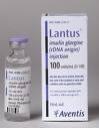
 Is there evidence to support the use of Lantus® (human insulin analog glargine) administered Q12h in Type 1 Diabetes?
Commentary by Kathy Lee, Pharmacy ResidentÂ
The goal of diabetes management is to reduce the …

Is there evidence to support the use of Lantus® (human insulin analog glargine) administered Q12h in Type 1 Diabetes?
Commentary by Kathy Lee, Pharmacy ResidentÂ
The goal of diabetes management is to reduce the …
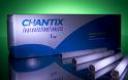 Commentary by Robert Leonard PharmD, Pharmacy Resident New York Harbor Healthcare System
On November 20, 2007 the FDA announced mounting evidence linking varenicline (Chantix®) therapy for smoking cessation with suicidal ideation and erratic and aggressive …
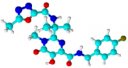 Commentary by Helen Kourlas PharmD, Pharmacology Section Editor
On October 16th the FDA announced the approval of raltegravir (Isentress®) for the treatment of Human Immunodeficiency Virus (HIV)-1 infection in combination with other antiretroviral agents. …
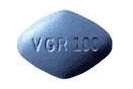 Commentary by Kathy Lee, Pharm.D. Pharmacy Practice Resident
On October 18 2007, the FDA announced the approval of labeling changes to erectile dysfunction (ED) drugs in the class known as phosphodiesterase type 5 (PDE-5) …
Commentary by Helen Kourlas, PharmD and John Papadopoulas, PharmD, Pharmacology Section Editors
The sulfonylureas are members of a class of substituted arylsulfonylureas that have been used clinically since the 1950s. These agents are usually divided into two categories or generations. First generation agents include acetohexamide, chlorpropamide, tolazamide, and tolbutamide (the …
 Commentary by Helen Kourlas, PharmD
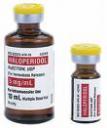
On September 17th 2007, the FDA issued an advisory warning healthcare professionals to avoid the use of higher than recommended doses of haloperidol, marketed as Haldol, Haldol Decanoate and …
 Commentary by Helen Kourlas, PharmD
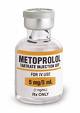
Beta-adrenergic receptor antagonists, commonly known as beta-blockers (B-blockers) have been used for decades to treat hypertension, ischemic heart disease and some arrhythmias – and more recently to …
Commentary By Susan Morey PharmD, Pharmacy Practice Resident
Approximately 3% of patients who use sulfonamide antibiotics develop an allergic reaction, with the most common being the development of a maculopapular rash. (1, 2, 3) Sulfonamides are chemical compounds which contain a SO2NH2 moiety and can be divided into 3 …